Picture this: You’re standing in a dimly lit cellar, surrounded by bottles that whisper tales of sun-drenched vineyards and generations of winemaking expertise. The air is thick with anticipation, and you can almost taste the stories each bottle holds. That, my friends, is the magic of a wine tasting.
I’ll never forget my first real wine tasting experience. There I was, a complete novice, trying to act like I knew what the hell I was doing. Swirling my glass like a pro (or so I thought), I accidentally sloshed a good portion of a pricey Bordeaux onto my white shirt. Smooth move, right? But you know what? That embarrassing moment was the beginning of a lifelong love affair with the world of wine.
Now, you might be wondering, “Why should I care about different types of wine tastings?” Well, let me tell you, understanding these various formats is like being handed a skeleton key to the wine world. It’s not just about sipping fancy grape juice – it’s about unlocking the secrets each bottle holds, comparing and contrasting flavors, and honestly, impressing the hell out of your friends at dinner parties.
So, buckle up, wine lovers. We’re about to embark on a journey through the fascinating world of wine tastings. Trust me, by the end of this, you’ll be itching to organize your own tasting adventure. Let’s pop that cork and get started!
The Classic Showdown: Vertical vs. Horizontal Tastings
Alright, let’s kick things off with the heavyweight champions of the wine tasting world: vertical and horizontal tastings. These two are the bread and butter of serious wine appreciation and the most common types of wine tasting. And trust me, they’re a lot more exciting than they sound.
Vertical Tastings: A Journey Through Time
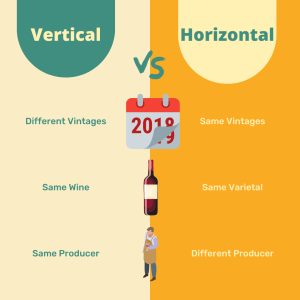
Picture vertical tastings as a liquid time machine. You’re not just drinking wine; you’re tasting history, my friends. In a vertical tasting, you sample different vintages of the same wine from the same producer. It’s like watching a child grow up, but a lot more fun and significantly boozier.
The whole point of this exercise is to understand how a wine evolves over time. You’ll pick up on subtle changes in flavor, aroma, and texture that occur as the wine ages. It’s fascinating stuff, really. One year might be all bright fruit and zesty acidity, while another could be mellow and complex.
One of my fondest vertical tastings I can remember like it was yesterday. It was a lineup of Chateau Margaux, spanning a decade. By the third glass, I was having an existential crisis about the passage of time and the fleeting nature of youth. By the fifth, I was convinced I could taste the rain that fell on the vineyards in 2005. Wine does funny things to you, folks.
If you want to try this at home (and I highly recommend you do), start small. Grab three or four vintages of your favorite wine. Hell, even two is fine to start with. The key is to taste them side by side. Oh, and pro tip: start with the youngest wine and work your way to the oldest. Your taste buds will thank you.
Horizontal Tastings: The Great Comparison
Now, horizontal tastings are a whole different ball game. Instead of traveling through time, you’re globetrotting. In this format, you taste wines from the same vintage but from different producers or regions. It’s like a United Nations summit, but with more alcohol and fewer boring speeches.
The beauty of horizontal tastings lies in their ability to showcase how factors like terroir, winemaking techniques, and grape varieties influence the final product. You might be surprised at how different two Chardonnays from the same year can taste.
I’ll never forget the horizontal tasting that completely upended my understanding of Pinot Noir. There I was, thinking I had it all figured out, when a flight of 2015 Pinots from around the world knocked me on my ass (figuratively, of course… mostly). The earthy complexity of Burgundy next to the fruit-forward punch of California and the elegant restraint of New Zealand – it was a revelation, I tell you.
Want to organize your own horizontal tasting? Pick a grape variety you love and grab bottles from different regions. Or if you’re feeling adventurous, try the same wine style from different countries. Prosecco vs. Cava vs. Champagne, anyone? Just remember: the goal isn’t to pick a winner, but to appreciate the diversity. Although, between you and me, there’s always a favorite – and this is how you help to discover your palate.
Blind Tastings: Stripping Away Preconceptions
Alright, wine aficionados, it’s time to put on your blindfolds. No, we’re not playing pin the tail on the donkey – we’re diving into the world of blind tastings – my favorite type of wine tasting. This is where things get real interesting, and sometimes, hilariously humbling.
Blind tasting is exactly what it sounds like: tasting wines without knowing what they are. It’s like going on a blind date with a bottle. Sometimes you’re pleasantly surprised, and sometimes… well, let’s just say not all matches are made in heaven.
There are different levels to this vinous Russian roulette. You’ve got your semi-blind tastings, where you might know the grape variety or region but not the producer or vintage. Then there’s the double-blind tasting, where you know absolutely nothing about the wine. This is the wine equivalent of being dropped in the middle of a foreign city without a map or Google Translate.
The whole point of this exercise is to strip away any preconceptions you might have about a wine. No fancy labels to sway your opinion, no price tags to influence your taste buds. It’s just you, your senses, and a glass of mystery juice.
Here’s a pro tip for setting up a blind tasting with friends: brown paper bags or aluminum foil are your best friend. Wrap those bottles up tight and let the guessing games begin. And remember, it’s not about getting it right – it’s about training your palate and having a damn good time doing it.
Oh, and a word of warning: blind tastings have a funny way of revealing our biases. You might find that $100 bottle you’ve been saving isn’t all it’s cracked up to be, or that the cheap plonk you usually scoff at is actually pretty damn delicious. It’s a wild ride, but that’s what makes it so much fun.
The Judgment of Paris: The Most Infamous Blind Tasting Ever
I’ll let you in on a little secret: blind tastings are where even the most seasoned wine pros can get their egos handed to them on a silver platter. Just look at the infamous Judgment of Paris in 1976. There you had some of the most respected French wine experts confidently swirling, sniffing, and declaring certain wines to be classic French vintages. Surprise, surprise! Those “French” wines they were raving about? California upstarts. Talk about a plot twist. The looks on their faces when the truth came out must have been priceless. It just goes to show, when you strip away the labels and the preconceptions, wine has a funny way of humbling even the most knowledgeable palates. Humbling? You bet. But also incredibly educational, and dare I say, a little bit hilarious.
Themed Tastings: Adding a Splash of Creativity
Alright, wine lovers, it’s time to let your imagination run wild. We’re talking themed tastings – the costume party of the wine world. This is where you get to flex your creative muscles and turn a regular old wine tasting into an event that would make Bacchus himself proud.
Regional Deep Dives
Ever wanted to travel the world but your bank account said “dream on”? Well, a regional wine tasting is your ticket to global exploration, minus the jet lag and overpriced airport food.
Pick a wine region – any region – and dive deep. I’m talking a full-on immersion. One of my favorite experiences was an Italian wine night. We started in the north with some crisp Alto Adige whites, zigzagged through Tuscany with bold Chiantis, and ended up in Sicily with rich, sun-soaked reds. By the end of the night, I was gesticulating wildly and calling everyone “paesano”. The wines might have had something to do with that.
Pro tip: Don’t just stop at the wine. Go all out with regional snacks, music, maybe even some cheesy decorations. Trust me, nothing brings the hills of Tuscany to life quite like a plastic grape vine draped over your living room lamp.
Want to learn more about Regional Wines? Check out our article Unveiling the World’s Wine Flavor Profile: A Tasting Tour by Region.
Varietal Explorations
If you’ve ever wondered just how versatile a single grape can be, varietal tastings are your new best friend. Pick a grape variety and taste its different expressions from around the world. It’s like meeting the extended family of your favorite wine.
I’ll never forget my Riesling revelation during one of these tastings. There I was, thinking Riesling was just that sickly sweet stuff your great-aunt drinks at Christmas, when a flight of Rieslings from around the world knocked me on my ass (figuratively, of course… mostly). We’re talking bone-dry Austrian beauties that could strip the enamel off your teeth, to lusciously sweet German Trockenbeerenauslese that made me want to bathe in it. And don’t even get me started on the Alsatian Grand Cru that tasted like biting into a ripe peach while standing in a limestone quarry. By the end of the night, I was ready to tattoo “Riesling Rocks” across my chest. Talk about a 180-degree turn! I had to apologize to Riesling for all the side-eye I’d given it over the years. Lesson learned: never judge a grape by its reputation.
If you are new to wine and want to start with the basic wine varietals, I have an article just for you: A No-Nonsense Tour of Essential Wine Varietals for Beginners: Your Journey Starts Here.
Food and Wine Pairing Tastings
Now we’re talking my language. Food and wine pairing tastings are where the magic really happens. It’s like playing matchmaker, but instead of setting up your single friends, you’re creating flavor marriages made in heaven.
One of my all-time favorite pairings was a bold Barolo with a truffle risotto. I swear, angels sang. But you know what? The most fun I’ve ever had at a pairing event was a junk food and fine wine night. Champagne with potato chips? Don’t knock it till you’ve tried it, folks.
The key to a successful food and wine pairing event is to be adventurous. Sure, stick to some classic pairings, but don’t be afraid to go off-piste. Some of the best discoveries come from the wildest experiments. Just maybe have some bread on hand to cleanse the palate between your more… creative pairings.
Progressive Tastings: Building Complexity
Alright, wine enthusiasts, it’s time to talk about progressive tastings. No, this isn’t about sipping Pinot Noir while discussing social justice (although, hey, that sounds like a pretty good night to me). We’re talking about a tasting format that’s all about building complexity and intensity.
In a progressive tasting, you start with lighter wines and gradually move to more full-bodied ones. It’s like a workout for your palate, but way more fun and with significantly more alcohol involved.
The typical progression goes something like this: light whites, rosés, full-bodied whites, light reds, and then full-bodied reds. If you’re feeling fancy, you might throw in some dessert wines at the end. It’s a journey, folks, and your taste buds are along for the ride.
Pro Tip on Progressive Tastings:
You know, my wine tastings with friends are almost always blind, but we’ve cooked up this ad hoc way of organizing the wines from lightest to boldest without giving anything away. It’s like a progressive tasting meets a magic trick. We wrap the bottles in aluminum foil (very classy, I know), then use a sharpie to draw little symbols on each one – one dot for the lightest, two for the next, and so on. It’s our secret code. This way, we get the best of both worlds: the surprise of a blind tasting with the sensory journey of a progressive one. By the time we hit those triple-dot bottles, our taste buds have gone from a gentle warm-up to a full-on flavor marathon. And let me tell you, trying to guess what’s in that last glass when your palate’s been through the wringer? That’s when the real fun begins. It’s like solving a delicious puzzle with a nice buzz.
Oh, and here’s a little trick I picked up along the way: keep some neutral crackers or bread on hand. They’re great for cleansing your palate between wines. Just don’t go overboard, or you’ll end up full before you hit the reds. Rookie mistake, that.
New Wave: Virtual and Hybrid Tastings
Well, well, well. Who would have thought that one day we’d be swirling, sniffing, and sipping through a computer screen? Welcome to the brave new world of virtual wine tastings, folks. It’s like The Jetsons, but with more Merlot.
The rise of online wine tasting experiences is a testament to our collective ability to adapt. And let’s be honest, it’s also a testament to our unwavering dedication to drinking wine, come hell or high water. Or, you know, global pandemics.
Now, I’ll be the first to admit that when I heard about virtual tastings, I was skeptical. “How the hell am I supposed to smell the wine through Zoom?” I grumbled. But let me tell you, these virtual experiences have their own unique charm.
For one, you can attend a tasting led by a winemaker in Tuscany while sitting in your pajamas in Toledo. It’s globalization at its finest, people. And let’s not forget the best part – no designated driver needed!
But it’s not all roses and perfectly aerated Pinot Noir. Virtual tastings come with their own set of challenges. There’s the inevitable technical difficulties (“You’re on mute, Karen!”), the challenge of coordinating wine deliveries, and the sad reality that you can’t sneak an extra pour from the spit bucket when no one’s looking.
I’ll never forget my first virtual tasting. There I was, trying to look sophisticated for the camera, when my cat decided it was the perfect time to start licking my wine glass. Nothing says “refined palate” quite like cat hair in your Chardonnay.
Tips on How to Host a Virtual Tasting
If you’re hosting or participating in a virtual tasting, here are a few tips from a seasoned virtual sipper:
- Test your tech beforehand. Nothing kills the vibe like spending the first 20 minutes troubleshooting your audio.
- Have a good light source (Amazon affiliate link). We want to see the wine, not your silhouette.
- Keep your mute button handy. Your fellow tasters don’t need to hear your neighbor’s lawnmower or your significant other yelling about the laundry.
- Have a spit cup ready. Just because you’re at home doesn’t mean you should throw tasting etiquette out the window. Your liver will thank you.
And hey, let’s not forget about hybrid tastings – the mullet of the wine world. Business in person, party online. These events combine in-person elements with virtual components, giving you the best of both worlds. It’s like having your wine and drinking it too.
Conclusion:
Well, fellow wine enthusiasts, we’ve swirled, sipped, and probably spilled our way through the wonderful world of wine tastings. From vertical voyages through time to horizontal globetrotting, from blind adventures to themed extravaganzas, we’ve covered it all. And let me tell you, it’s been one hell of a journey.
But here’s the thing – reading about types of wine tastings is like looking at pictures of food. It’s nice, but it doesn’t quite satisfy the craving, does it? So here’s my challenge to you: get out there and experience these tastings for yourself. Step out of your vinous comfort zone. Try that varietal you can’t pronounce. Attend that virtual tasting in your pajamas. Hell, organize a blind tasting and watch your friends squirm as they try to tell a Merlot from a Malbec.
Remember, every great wine journey begins with a single sip. And trust me, once you start exploring these different tasting formats, you’ll discover a whole new level of appreciation for what’s in your glass. You’ll start to see the stories behind the wines, the passion of the winemakers, the influence of the terroir. And before you know it, you’ll be that person at dinner parties, waxing poetic about the earthy notes in your Pinot Noir.
But most importantly, you’ll be having a damn good time. Because at the end of the day, that’s what wine is all about. It’s not about being pretentious or knowing all the fancy terms. It’s about enjoyment, exploration, and maybe learning a thing or two along the way.
So, my wine-loving friends, what are you waiting for? Go forth and taste! And hey, if you stumble upon a particularly memorable tasting experience, come back and share it in the comments. After all, the only thing better than drinking great wine is talking about drinking great wine.
One response to “Uncorking the Mystery: A Guide to Different Types of Wine Tastings”
-
[…] To learn more about different types of wine tastings, check out Uncorking the Mystery: A Guide to Different Types of Wine Tastings […]
Leave a Reply