I once confused a $200 Bordeaux with a $15 table wine. Embarrassing? Hell yes. A turning point? Absolutely. That moment of utter humiliation in front of a group of wine snobs—er, enthusiasts—lit a fire under my ass to seriously up my wine game.
Look, we’ve all been there. You’re at a fancy dinner, someone hands you a glass, and suddenly you’re expected to wax poetic about notes of leather and tobacco. But here’s the thing: wine tasting isn’t some mystical art reserved for tweed-wearing sommeliers. It’s a skill, and like any skill, it can be honed, refined, and mastered.
Why bother, you ask? Well, besides avoiding social faux pas, developing your wine tasting skills opens up a whole new world of pleasure. You’ll appreciate the nuances in your glass, make better buying decisions, and yes, maybe even impress that cute sommelier at your local wine bar.
So, buckle up, buttercup. We’re about to embark on a journey that’ll take your taste buds from “meh” to “magnificent”. And trust me, by the end of this, you’ll be swirling and sniffing with the best of them.
Just a quick heads up: some of the links in this post are Amazon affiliate links. What does that mean? Well, if you click on one of these links and decide to buy something, I’ll earn a small commission at no extra cost to you. It’s like buying me a glass of wine for the recommendation. Cheers to that! Rest assured, I only recommend products I genuinely believe in. Your trust is worth more than any commission. Now, let’s get back to our regularly scheduled wine programming!
1. Train Your Nose: The Gateway to Wine Appreciation
Let’s get one thing straight: your nose is the MVP of wine tasting. I learned this the hard way after a nasty cold left me thinking all wines tasted like wet cardboard. Turns out, up to 80% of what we perceive as taste actually comes from our sense of smell. Mind-blowing, right?
Here’s the deal: training your schnoz is like going to the gym for your olfactory senses. It takes time, effort, and yeah, you might look a bit weird doing it. But the payoff? Oh, it’s worth it.
The Wine Aroma Wheel
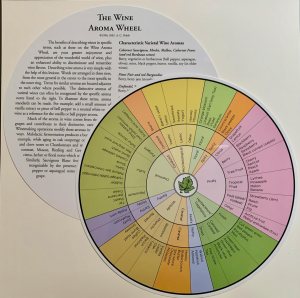
First things first, get yourself a wine aroma wheel. This circular chart of descriptors is like the Rosetta Stone of wine smells. It’ll help you put words to those elusive scents wafting from your glass. When I first got mine, I spent hours sniffing everything in sight, from my leather jacket to my mom’s garden. My family thought I’d lost it, but hey, no pain, no gain.
If you want to learn more about The Wine Aroma Wheel, and its history, I wrote a whole article about it: Decoding Wine Aromas: Mastering the Wine Aroma Wheel
Exercising Your Nose
Now, onto daily sniffing exercises. I’m not kidding. Start with familiar scents—fruits, spices, flowers. Take a good whiff, close your eyes, and try to commit that smell to memory. Then, graduate to more complex aromas. That damp earth smell after rain? That’s petrichor, and it’s a common note in many wines. The goal is to build a mental library of scents you can reference when you’re tasting.
But here’s a pro tip: watch out for olfactory fatigue. Your nose can get overwhelmed, just like your taste buds. I once made the rookie mistake of trying to power through a 20-wine tasting. By the end, everything smelled like regret and bad decisions. Take breaks, sniff some coffee beans (they’re like a palate cleanser for your nose), and remember: quality over quantity.
Training your nose isn’t just about identifying a bazillion different scents. It’s about developing a more nuanced appreciation for the wine in your glass. And trust me, once you start picking up those subtle notes of blackberry or that hint of vanilla, you’ll feel like a goddamn wine wizard. Abracadabra, indeed.
2. Master the Art of Proper Tasting Technique
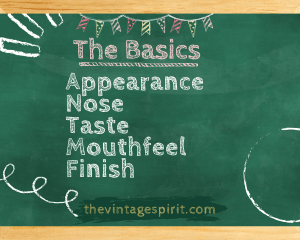
Alright, time to talk technique. You know those people who pick up a glass of wine and start swirling it like they’re auditioning for Cocktail? Yeah, don’t be that guy. There’s method to the madness of wine tasting, and it’s all about the five S’s: Sight, Swirl, Smell, Sip, and Savor.
Let’s break it down, shall we?
Sight
Hold that glass up to the light. What color is it? Is it clear or cloudy? This isn’t just for show—the color can tell you a lot about the wine’s age and type. I once dismissed a slightly brownish white wine as “off,” only to learn it was a perfectly aged Sauternes. Rookie mistake.
Swirl
Ah, the swirl. It’s not just for looking fancy (though it does help with that). Swirling releases the wine’s aromas and tells you about its body. The trick? Keep the base of the glass on the table and move it in small circles. I learned this the hard way after redecorating my white shirt with a particularly enthusiastic swirl.
Smell
Get your nose in there! Don’t be shy. Take short, sharp sniffs rather than one long inhale. This helps you pick up different aromas each time. And for the love of Bacchus, don’t wear strong perfume or cologne when wine tasting. Trust me, eau de Merlot beats Chanel No. 5 any day in this context.
Sip
Take a small amount into your mouth and let it roll over your tongue. Try the “slurp and chew” method—yes, it sounds (and looks) ridiculous, but it helps aerate the wine and spread it across your palate. I felt like an idiot the first time I tried this in public, but the complex flavors I picked up made it worth the embarrassment.
Savor
This is where the magic happens. Pay attention to the wine’s taste, how it feels in your mouth, and how long the flavors linger after you swallow. Is it smooth or tannic? Light or full-bodied? The first time I really savored a wine, it was like hearing a favorite song in high definition for the first time.
Tasting Mistakes
Now, let’s talk about some common mistakes. Rushing through the process is a big one. Wine tasting isn’t a race—it’s more like a leisurely stroll through flavor country. Another pitfall is the death grip on the glass. Hold it by the stem to avoid warming the wine with your hand. Unless it’s red wine that’s too cold, in which case, cup away, my friend.
Remember, practice makes perfect. The more you taste, the better you’ll get. Just maybe don’t practice too much in one sitting, unless you want your wine tasting skills to be accompanied by a world-class hangover. Cheers to that!
3. Expand Your Palate Through Deliberate Practice
Look, I’m going to let you in on a little secret: the path to wine enlightenment isn’t paved with expensive bottles and fancy tastings. It’s built on consistency, curiosity, and a willingness to drink outside your comfort zone. In other words, deliberate practice.
When I first started, I was a one-trick pony. Cabernet Sauvignon was my jam, and I turned my nose up at anything else. Big mistake. Huge. It wasn’t until I forced myself to try a different wine every week that my palate really started to expand. And let me tell you, that journey from “ew, what is this?” to “oh, interesting!” is one hell of a ride.
Structured Tastings
So, how do you practice deliberately? Start with structured tastings. Vertical tastings, where you try different vintages of the same wine, are great for understanding how age affects flavor. Horizontal tastings, on the other hand, let you compare different wines from the same year. It’s like wine time travel, minus the DeLorean.
I remember my first vertical tasting of Châteauneuf-du-Pape. The 2010 was all bold fruit and spice, while the 2005 had mellowed into a silky, complex beauty. It was like watching a person grow up in fast-forward, but with more tannins.
Regional Tastings
Next up: regional focus tastings. This is your chance to travel the world without leaving your living room. One week, you’re in Tuscany with Sangiovese. The next, you’re down in Argentina with Malbec. It’s like being a vinous Indiana Jones, exploring the terroir and traditions of each region through your glass.
To read more about Regional Wines and Flavors, check out Unveiling the World’s Wine Flavor Profiles: A Tasting Tour by Region
Pro-Tip: It Is OK to Spit
Now, let’s address the elephant in the room: spitting. Yes, it feels wrong. Yes, it looks gross. But if you’re serious about tasting (and not about getting sloshed), it’s necessary. I resisted for the longest time, thinking it was pretentious. Then I tried to taste 12 wines without spitting. Let’s just say the last few tasting notes were… creative. “Tastes like poor life choices” is not a recognized wine descriptor.
The key is to find a balance. Spit during serious tastings or when you’re trying a lot of wines. Swallow when you want to fully experience a wine or when you’re having a more relaxed tasting session. And always, always have water and crackers on hand. Your palate (and your head the next morning) will thank you.
Remember, expanding your palate is a journey, not a destination. Be patient with yourself. That Gewürztraminer might taste like grandma’s perfume today, but give it time. Before you know it, you’ll be extolling its virtues to anyone who’ll listen. And isn’t that what being a wine enthusiast is all about?
4. Sharpen Your Senses with Comparative Tastings
Alright, wine padawans, it’s time to kick it up a notch. If you really want to sharpen those senses and develop a palate that can pick up nuances like a bloodhound on a scent trail, comparative tastings are your new best friend.
Picture this: I’m at a buddy’s place for what I thought was a casual wine night. He brings out two glasses of red wine and asks me what I think. I sip the first one – nice, fruity, bold. The second – also nice, but maybe a bit more complex? I shrug, feeling pretty pleased with my astute observations. Then he drops the bomb: they’re the same wine, just from different vintages. Mind. Blown.
That, my friends, is the power of comparative tasting. It’s like putting your taste buds under a microscope, forcing them to really focus on the subtle differences between wines. And let me tell you, it’s a game-changer.
So, how do you set up an effective comparative tasting at home? Easy. Start with two wines that have something in common but are different in some way. Here are some ideas to get you started:
Old World vs. New World
Take a French Syrah and an Australian Shiraz. Same grape, different continents. The French one might be more restrained, with earthy notes, while the Aussie could be a fruit bomb. It’s like comparing a reserved Parisian to a boisterous Aussie at a party.
Same grape, different regions
Try a Pinot Noir from Burgundy and one from Oregon. It’s amazing how the same grape can express itself so differently based on where it’s grown. The Burgundy might be all elegance and red fruits, while the Oregon Pinot could show off riper fruit and a fuller body. Terroir is not just a fancy French word, folks.
Price point face-offs
This is where it gets really interesting. Grab a $15 bottle and a $50 bottle of the same type of wine. Is the expensive one really better? Often yes, but sometimes no. I once did this with Côtes du Rhône and preferred the cheaper bottle. My wallet rejoiced, my wine snob friends were horrified. Win-win.
Keys to Comparative Wine Tastings
The key to comparative tasting is to focus on the differences. Take notes, be specific. Is one wine more acidic? Does one have a longer finish? Are the tannins softer in one than the other? It’s like playing spot the difference, but with your mouth.
And here’s a pro tip: do it blind. Have a friend pour the wines for you without telling you which is which. It removes any preconceptions and forces you to really rely on your senses. Fair warning though: this can lead to some humbling experiences. I once confidently declared a wine to be a high-end Bordeaux, only to find out it was a $10 Merlot from the supermarket. Oops.
Remember, the goal here isn’t to become a human wine encyclopedia. It’s about training your palate to notice and appreciate the nuances in wine. And who knows? Maybe next time you’re at a fancy dinner party, you’ll be the one impressing everyone with your keen observations. Just try not to be too smug about it, okay?
5. Dive into Wine Education: Knowledge is Power
Alright, wine warriors, it’s time to hit the books. Or the screens. Or whatever medium floats your boat. Because here’s the truth bomb: all the tasting in the world won’t mean squat if you don’t have the knowledge to back it up. It’s like trying to speak a language by only listening to it – you might pick up a few words, but you’ll miss the nuances.
Now, I know what you’re thinking. “But isn’t wine all about drinking and enjoying?” Well, yes. But also, no. Understanding the context – the history, the geography, the winemaking process – it all adds layers to your appreciation. Trust me, the first time I understood why a Chablis tastes the way it does (hello, Kimmeridgian limestone!), it was like someone had turned on the lights in a dim room.
So, where do you start? Well, we’re living in the golden age of information, my friends. You’ve got options:
Online Courses
These are great for self-paced learning. I did one while lounging in my pajamas, glass in hand. Learning about wine while drinking wine? That’s what I call multitasking. Just be careful not to spill on your laptop.
In-person Classes
Nothing beats the hands-on experience. Plus, you get to taste wines you might not buy on your own. I once attended a class on Italian wines and discovered I actually like Lambrusco. Who knew?
Books
Ah, the old-school approach. There’s something satisfying about curling up with a good wine book. Just be prepared for some intense cravings. I made the mistake of reading about Burgundy before bed once. Let’s just say my dreams were very… grape-focused.
Bonus Thoughts on Wine Education
Now, let’s talk about the elephant in the room: the WSET (Wine & Spirit Education Trust) path. It’s the gold standard in wine education, but it’s not for the faint of heart. I decided to take the plunge and go for my WSET Level 2. Was it challenging? Yes. Did I have moments of doubt when faced with pages of wine regions to memorize? Absolutely. Did I feel like a total badass when I passed? You bet your sweet Sauternes I did.
But here’s the thing: you don’t need fancy certifications to appreciate wine. They’re great if you’re looking to make a career in the wine world, but for most of us wine enthusiasts, they’re not necessary. What is necessary is curiosity and a willingness to learn.
Remember, though, that all this book learning needs to be balanced with practical experience. You can read about the difference between Pouilly-Fumé and Pouilly-Fuissé all day, but until you taste them side by side, it’s all just words on a page.
So, crack open a book, sign up for a course, or hell, start a wine study group with your friends. Just promise me one thing: never, ever let all this knowledge turn you into a wine snob. There’s nothing worse than someone who can rattle off vintages but has forgotten how to simply enjoy a glass of wine. Stay curious, stay humble, and for the love of all that’s grape and good, keep drinking. Cheers to that!
6. Perfect Your Blind Tasting Skills
Alright, hotshot, you’ve been swirling, sniffing, and sipping like a pro. You can rattle off wine regions like a sommelier on speed. But can you identify a wine when you don’t know what’s in your glass? Welcome to the wild world of blind tasting, where your senses are your only compass, and your ego is in for one hell of a ride.
Let me tell you, my first attempt at blind tasting was… humbling, to say the least. I confidently declared a wine to be a bold Cabernet Sauvignon from Napa. Turns out, it was a Malbec from Argentina. Oops. But you know what? That embarrassing moment taught me more than a dozen regular tastings could have.
So, why bother with this wine Russian roulette? Well, blind tasting strips away all your preconceptions. There’s no pretty label to influence you, no price tag to sway your opinion. It’s just you, your senses, and the wine. It’s the ultimate test of your tasting skills, and let me tell you, it’s addictive.
Now, let’s talk strategy. The pros use something called the grid method. It’s a systematic approach to tasting that helps you break down the wine into its component parts. You start with the appearance, move on to the nose, then the palate, and finally, you make your best guess as to what the wine is.
Here’s a pro tip: start broad, then narrow it down.
Is it white or red? (If you get this wrong, maybe wine tasting isn’t for you.) Is it light, medium, or full-bodied? Old World or New World? Once you’ve got the basics, you can start honing in on specific grape varieties and regions.
But beware, there are pitfalls. One big one is jumping to conclusions too quickly. Just because you smell black currant doesn’t mean it’s definitely a Cabernet Sauvignon. I once made that mistake and ended up confusing a Syrah for a Cab. Talk about a rookie error. Another trap is overthinking it. Sometimes, the simplest answer is the right one. If it looks like a duck, swims like a duck, and quacks like a duck, it’s probably a duck. Or in this case, if it tastes like a Chardonnay, it’s probably a Chardonnay.
Now, want to really up your game? Host your own blind tasting party.
It’s like poker night, but with more purple teeth. Here’s how to do it:
- Get a few friends together. Preferably ones who won’t judge you too harshly when you mistake a Pinot Grigio for a Sauvignon Blanc.
- Have everyone bring a bottle wrapped in foil or a paper bag. Pro tip: make sure someone keeps track of which wine is which, or things could get confusing real fast.
- Pour the wines and let the games begin! Take turns guessing and discussing each wine. It’s amazing how differently people can perceive the same wine.
- Reveal the wines at the end. Prepare for surprises, laughs, and maybe a few bruised egos.
Remember, the goal of blind tasting isn’t to be right all the time. It’s to train your palate, challenge your assumptions, and most importantly, have fun. Because at the end of the day, if you’re not enjoying yourself, you’re missing the whole point of wine.
So go ahead, put on that blindfold (or paper bag), and dive into the mystery. Your taste buds will thank you, even if your ego doesn’t.
7. Embrace Technology: Apps and Tools for the Modern Wine Taster
Alright, wine nerds, time to get techy. In this digital age, there’s an app for everything, including helping you become a better wine taster. Now, I know what you’re thinking: “But isn’t wine all about tradition and rejecting modern distractions?” Well, yes and no. While there’s something to be said for the old-school approach, technology can be a powerful ally in your wine journey. Just don’t whip out your phone in the middle of a fancy tasting, okay?
Let me tell you about my first encounter with wine apps. There I was, standing in the wine aisle of my local store, completely overwhelmed by the choices. Then I remembered this app a friend had mentioned. I downloaded it, scanned a few labels, and suddenly I had access to reviews, ratings, and food pairings right at my fingertips. It was like having a sommelier in my pocket. Game changer.
So, what are some of the best apps out there? Well, Vivino is a popular one. It’s great for tracking the wines you’ve tried and getting recommendations based on your tastes. Another favorite is Wine-Searcher, which is fantastic for finding the best prices on wines. And for those of you studying for wine exams (you brave souls), WSET has an app that’s basically digital flashcards for wine. I may or may not have been caught using it under the table during a particularly boring work meeting.
But here’s the thing: while these apps are incredibly useful, they shouldn’t replace your own judgment. I once relied too heavily on app ratings and missed out on some fantastic wines that just hadn’t been reviewed much. Remember, your palate is unique, and what scores highly on an app might not be your cup of tea (or glass of wine, in this case).
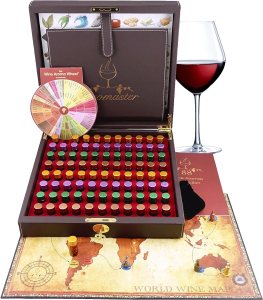
Now, let’s talk about some other tech tools. Have you heard about aroma kits? They’re like scratch-and-sniff cards for grown-ups who like wine. I got one as a gift, and let me tell you, it’s both hilarious and helpful. There’s something oddly satisfying about sitting on your couch, sniffing little scent vials, and pretending you’re at a high-end tasting.
And don’t forget about social platforms for wine enthusiasts. Sites like Cellartracker let you connect with other wine lovers, share tasting notes, and get recommendations. It’s like Facebook, but with more tannins and less political arguments. I once got into a heated debate on there about the merits of natural wine. It was the most civilized argument I’ve ever had on the internet.
But here’s my word of caution: don’t let technology replace the social aspect of wine tasting. Wine is meant to be shared, discussed, enjoyed with others. I’ve been to tastings where everyone’s heads were buried in their phones, frantically inputting tasting notes. It was about as fun as a dentist appointment.
The key is to find a balance. Use apps and tools to enhance your knowledge and track your experiences, but don’t let them dictate your tastes or ruin the simple pleasure of enjoying a glass with friends.
So go ahead, download that app, join that online wine community. Just remember to look up from your screen every once in a while and really savor what’s in your glass. After all, no app can replicate the joy of discovering a new favorite wine or sharing a special bottle with good company. Cheers to technology, but an even bigger cheers to the timeless pleasure of wine itself!
Conclusion:
Well, folks, we’ve swirled, sniffed, and sipped our way through seven surefire ways to improve your wine tasting skills. From training your nose like a bloodhound to embracing technology like a Silicon Valley sommelier, you’re now armed with the tools to take your wine game to the next level.
Remember, improving your wine tasting skills isn’t about becoming a snob or impressing your friends (although that’s a nice side effect). It’s about enhancing your own enjoyment. It’s about transforming that glass of fermented grape juice into a sensory adventure, a little vacation for your taste buds.
But here’s the most important thing I’ve learned on my wine journey: there’s always more to learn. Wine is a subject so vast, so complex, that even the most seasoned experts are constantly discovering new things. So don’t get discouraged if you can’t immediately distinguish between a Pouilly-Fumé and a Pouilly-Fuissé. Hell, I still mix those up sometimes, and I’m supposed to be giving advice here.
The key is to keep tasting, keep exploring, and most importantly, keep enjoying. Try new wines. Visit wineries if you can. Start a tasting group with friends. And for the love of all that’s grape and good, don’t be afraid to ask questions. Wine people love to talk about wine. Trust me on this one.
So, here’s your homework (and trust me, this is the best kind of homework): Go out there and taste some wine! Put these skills into practice. Challenge yourself. And remember, even if you can’t detect those notes of freshly tanned leather and sun-dried tomatoes, it doesn’t matter. If you like the wine, it’s a good wine.
Now, if you’ll excuse me, all this talk of wine has made me thirsty. I think it’s time for a little “practical application” of these skills. Cheers to you, and to your exciting wine journey ahead!
2 responses to “Swirl, Sip, Master: 7 Surefire Ways to Improve Your Wine Tasting Skills”
-
[…] Need help on improving those wine tasting techniques? Check out Swirl, Sip, Master: 7 Surefire Ways to Improve Your Wine Tasting Skills […]
-
[…] Interested in reading more about improving your wine tasting skills? Check out Swirl, Sip, Master: 7 Surefire Ways to Improve Your Wine Tasting Skills. […]
Leave a Reply