Did you know that humans can detect over 1 trillion different scents? Yet when it comes to wine, most of us struggle to get past “fruity” or “oaky.” It’s like having a Ferrari and only driving it to the corner store. But fear not, fellow oenophiles – I’m here to help you put that schnoz of yours into high gear.
Let me tell you, when I first started getting serious about wine, I was lost in a sea of confusing descriptors. “Notes of pencil shavings and wet dog?” Give me a break. But then I discovered the wine aroma wheel, and without a doubt, it changed the game.
The wine aroma wheel isn’t just some fancy circular chart – it’s your secret weapon in the world of wine tasting. It’s like having a cheat sheet for your nose, helping you identify and articulate the complex aromas swirling in your glass. And trust me, once you start nailing those scents, you’ll feel like a goddamn superhero at your next dinner party.
Alright, wine lovers, let’s talk shop for a second. You know those fancy-schmancy links peppered throughout this aromatic adventure? Yeah, the ones that lead to some pretty sweet wine gear on Amazon. Here’s the deal: if you decide to pull the trigger and buy something through those links, yours truly gets a little kickback. We’re talking pocket change here, not “buy a vineyard in Napa” money.
But hey, it doesn’t cost you an extra cent, and it helps keep my wine fridge stocked for more “research.” Wink, wink. It’s like you’re buying me a glass of wine for all this nose-training wisdom I’m dropping. Everybody wins!
What Is the Wine Aroma Wheel?
The wine aroma wheel is basically a circular diagram that categorizes the vast array of scents you might encounter in wine. It was developed by Ann C. Noble, a sensory chemist and former professor at UC Davis, back in 1984. And let me tell you, this woman deserves a statue in every vineyard.

The genius of Noble’s wheel is its structure. It starts with broad categories in the center and gets more specific as you move outward. It’s like a roadmap for your nose, guiding you from “vegetative” all the way to “canned asparagus” (yeah, that’s a real wine descriptor, and no, I’m not making this shit up).
Now, you might be thinking, “Can’t I just use one of those fancy schmancy apps?” Sure, there are digital tools out there, but there’s something about the tactile experience of a physical wheel that just works. It’s like the difference between reading “War and Peace” on your phone versus holding that weighty tome in your hands. Sometimes, old school is the best school.
Understanding the Structure of the Wine Aroma Wheel
It’s time for a quick anatomy lesson. The wine aroma wheel is divided into tiers, like some sort of olfactory wedding cake. At the center, you’ve got your broad categories – fruity, floral, spicy, earthy, etc. As you move outward, these categories get more specific.
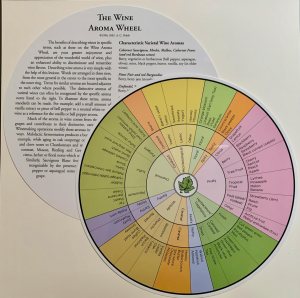
For example, let’s say you’re sipping a Cabernet Sauvignon and you detect a fruit aroma. Cool, that’s tier one. Move outward, and you might narrow it down to “berry.” Keep going, and you could end up at “blackberry” or “raspberry.” It’s like playing a scent-based game of 20 Questions with your wine.
Now, here’s where it gets interesting. The wheel also helps you distinguish between primary, secondary, and tertiary aromas. Primary aromas come from the grape itself, secondary aromas develop during fermentation, and tertiary aromas evolve during aging. It’s like watching your wine grow up and develop its own personality. Brings a tear to my eye, really.
Breaking Down the Major Aroma Categories
Grab your glasses, because we’re about to take a whirlwind tour through the major aroma categories. And remember, there are no wrong answers here – unless you’re getting notes of motor oil or sweaty gym socks. In that case, you might want to check if you’re actually drinking wine.

Fruit Aromas: This is usually where most of us start. You’ve got your berries, your stone fruits, your tropical fruits. A Pinot Noir might give you cherry or strawberry, while a Sauvignon Blanc could hit you with grapefruit or passion fruit. I once had a Gewürztraminer that smelled so much like lychee, I half expected to find the fruit floating in my glass.
Floral Aromas: These are the scents that make you feel like you’re frolicking through a damn garden. Rose, violet, geranium – it’s like a bouquet in a bottle. Gewürztraminer and Viognier are notorious floral bombs. The first time I nailed a jasmine note in a Torrontés, I felt like I’d cracked the Da Vinci code.
Spice Aromas: This is where things start getting interesting. We’re talking black pepper, cinnamon, clove – all that good stuff. Syrah is famous for its peppery notes, while some oaked Chardonnays can give you a hit of vanilla that’ll make you crave ice cream.
Herbal and Vegetative Aromas: Now we’re venturing into “love it or hate it” territory. Bell pepper in your Cabernet Franc? Totally normal. Freshly cut grass in your Sauvignon Blanc? Par for the course. I once had a Carménère that smelled like I’d face-planted into an herb garden. It was…an experience.
Earth and Mineral Aromas: This is where wine starts tasting like, well, not fruit juice. Forest floor, wet stone, petrichor (that’s the smell of rain on dry earth, for you non-weather nerds). Ever licked a stone? No? Well, some Chablis might give you an idea of what that’s like. It’s weirdly delicious, I promise.
Oak-Derived Aromas: Ah, oak. The winemaker’s spice rack. This is where you get those vanilla, toast, and smoke aromas. Some people love it, some people think it’s cheating. Me? I say if it tastes good, drink it. Life’s too short for wine snobbery.
How to Use the Wine Aroma Wheel in Practice
It’s time to put this wheel to work. Here’s my tried-and-true method for using the wine aroma wheel without looking like a pretentious ass:
- Pour yourself a glass. A proper glass, mind you, not your “World’s Best Dad” mug. If you’re serious about this, invest in some quality glassware. A Universal Wine Glass like this one is an excellent choice for a beginner.
- Give it a swirl. This isn’t just for show – it releases the aromas. Don’t be shy, really get it moving. Just maybe not while wearing your white shirt.
- Stick your nose in there. I mean really get in there. If you’re not worried about leaving a nose print on the glass, you’re not close enough.
- Take a big sniff. But don’t go full bloodhound – you’ll just overwhelm your senses and end up with a nose full of alcohol burn.
- Now, here’s the key: don’t think too hard. What’s the first thing that comes to mind? Fruit? Flowers? Your grandmother’s linen closet? There are no wrong answers.
- Once you’ve got a general idea, consult your wheel. Start at the center and work your way out. It’s like a scavenger hunt for your nose.
- Take another sniff. Can you narrow it down further? Maybe that “fruity” is more specifically “citrus,” and even more specifically “lemon.”
- Repeat as necessary. And remember, it’s totally okay to come up with descriptors that aren’t on the wheel. If that Syrah smells like your leather jacket, then by god, it smells like your leather jacket.
Beyond the Basics: Advanced Techniques with the Aroma Wheel
Once you’ve got the basics down, it’s time to level up. Here are some pro tips I’ve picked up over years of sticking my nose where it belongs – in wine glasses:
Develop Your Own Aroma Library: This is where it gets fun. Start collecting scents. Seriously. Next time you’re at the farmer’s market, take a whiff of everything. Stick your nose in some fresh-cut grass. Hell, go to a hardware store and smell the lumber. You’re building a mental database of scents, and it’s going to make you a wine-sniffing superhero.
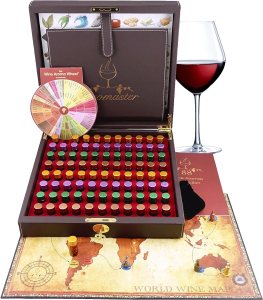
Pair the Wheel with Other Tools: The wheel is great, but it’s not the only tool in your arsenal. Consider investing in a wine aroma kit. These kits contain little vials of common wine aromas. It’s like smell training for your nose.
Use It for Blind Tastings: Once you’re comfortable with the wheel, try using it for blind tastings. It’s like wine detective work. Can you deduce the grape variety or region just from the aromas? It’s a fun party trick, and it’ll impress the hell out of your wine-loving friends.
The Science Behind Wine Aromas
Alright, time for a quick science lesson. Don’t worry, I’ll try to keep it less boring than your high school chemistry class.
Wine aromas come from volatile compounds in the wine. These are molecules that evaporate easily, wafting up into your nose and triggering your olfactory receptors. It’s like a little aroma dance party in your nasal cavity.
These compounds come from various sources. Some are present in the grapes themselves, some develop during fermentation (thank you, yeast), and others evolve during aging. It’s a complex process that’s part science, part alchemy, and part magic.
And let’s not forget about terroir. That’s a fancy French term that basically means “sense of place.” The soil, climate, and topography of a vineyard all influence the aromas in the resulting wine. It’s why a Sauvignon Blanc from New Zealand smells different from one from the Loire Valley, even though they’re made from the same grape.
Enhancing Your Sense of Smell for Better Wine Tasting
Alright, time for some nose calisthenics. Yes, that’s a thing. Here are some exercises to turn your nose into a finely-tuned wine-sniffing machine:
- The Morning Coffee Ritual: Before you guzzle your morning joe, take a moment to really smell it. Try to pick out different aromas. Is it nutty? Chocolatey? Does it remind you of that time you accidentally burned your toast?
- The Spice Rack Challenge: Grab some spices from your rack (or if you’re like my old roommate, the sad little shelf with salt and two-year-old dried oregano). Take a whiff of each one. Try to memorize the scents. It’s like flashcards for your nose.
- The Fruit Bowl Sniff-a-thon: Next time you’re at the grocery store, spend some quality time with the fruit. Smell everything. Yes, you’ll look weird. No, you shouldn’t care. You’re on a mission. Plus, as a bonus, you will learn to pick better fruit in the process (pick the one that smells the most like it should!)
- The Blind Smell Test: Get a friend to put various scented items in opaque containers. Try to identify them by smell alone. It’s like a party game, but for wine nerds.
Remember, smell fatigue is real. If you’re in the middle of a marathon tasting session and everything starts smelling the same, take a break. Go outside, get some fresh air. Your nose will thank you.
Conclusion
And there you have it, folks – your crash course in the wine aroma wheel. Remember, this isn’t about being right or wrong. It’s about developing your own sensory vocabulary and, most importantly, enjoying the journey.
Wine tasting isn’t a test, it’s an adventure. So grab a bottle, pour yourself a glass, and start sniffing. And hey, if all you’re getting is “red” and “wet,” that’s okay too. Rome wasn’t built in a day, and neither is a master wine taster.
Now, if you’ll excuse me, all this talk of wine has made me thirsty. I’ve got a date with a Syrah that’s been giving me eyes from the wine rack all day. Cheers, and happy sniffing!
4 responses to “Decoding Wine Aromas: Mastering the Wine Aroma Wheel”
-
[…] anything too flavorful, or you’ll be tasting that instead of the wine. Lastly, get yourself a wine aroma wheel and check out my related article on them. It’s like a cheat sheet for your nose. When […]
-
[…] If you want to learn more about The Wine Aroma Wheel, and its history, I wrote a whole article about it: Decoding Wine Aromas: Mastering the Wine Aroma Wheel […]
-
[…] For more information, check out Decoding Wine Aromas: Mastering the Wine Aroma Wheel […]
-
[…] Decoding Wine Aromas: Mastering the Wine Aroma Wheel […]
Leave a Reply