Imagine this: You’ve just uncorked a bottle you’ve been saving for a special occasion. You pour a glass, swirl it around, take a deep breath, and… what the hell? It smells like wet cardboard. Congratulations, my friend. You’ve just encountered your first wine fault.
Now, don’t panic. Even us so-called “experts” run into faulty wines more often than we’d like to admit. But here’s the thing – knowing how to spot these faults can save you money (reputable wine shops will often allow an exchange for a faulty bottle), impress your friends, and most importantly, help you avoid drinking some truly nasty stuff. So, let’s dive into the world of wine faults, shall we?
What Are Wine Faults?
Alright, let’s get one thing straight – wine faults aren’t just a fancy term for wines you don’t like. Trust me, I’ve had plenty of wines that weren’t my cup of tea (or glass of Merlot), but that doesn’t make them faulty. Wine faults are specific defects that occur during the winemaking process, storage, or even after the bottle’s been opened.
These faults can turn a potentially great bottle into something that’ll make you question why anyone drinks wine in the first place. But here’s the kicker – sometimes what one person considers a fault, another might see as a unique characteristic. It’s like how some people love cilantro, and others think it tastes like soap. Wine’s funny like that.
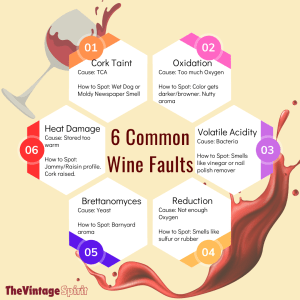
Cork Taint (TCA): The Wet Cardboard Culprit
Remember that wet cardboard smell I mentioned? That’s cork taint, also known as TCA. It’s the granddaddy of wine faults, and it’s a real pain in the cork.
TCA occurs when certain fungi interact with chlorine compounds in the cork, creating a chemical that smells like your grandma’s attic after a flood. It can range from subtle to downright offensive, and it’s estimated to affect about 2-3% of all wines with natural corks.
Here’s a pro tip: If you open a bottle and it smells like wet dog or moldy newspaper, it’s probably corked. Don’t try to power through it – life’s too short for bad wine. Take it back to the store or send it back at the restaurant. Trust me, they’ve dealt with this before.
Oxidation: When Wine Meets Too Much Air
You know how an apple turns brown when you leave it out? Wine does something similar when it’s exposed to too much oxygen. We call this oxidation, and it’s like time travel for wine – but not in a good way.
Oxidized wine loses its fresh fruit flavors and takes on a nutty, sherry-like quality. The color changes too – whites turn darker, and reds start to look brownish. Now, don’t get me wrong – some wines, like Sherry, are intentionally oxidized. But for most wines, it’s about as welcome as a skunk at a garden party.
I once left a bottle of Sauvignon Blanc open in my fridge for a week (don’t judge me). When I finally got around to finishing it, it tasted more like a weird apple cider than the crisp, zesty wine I’d started with. Lesson learned – invest in a good wine preserver if you’re a slow drinker like me.
Volatile Acidity (VA): The Vinegar Effect
Ever opened a bottle of wine and thought, “Huh, this smells like nail polish remover”? Congrats, you’ve just encountered volatile acidity, or VA for short.
VA is caused by bacteria that produce acetic acid – the same stuff that gives vinegar its punch. A little bit of VA can actually add complexity to a wine (I’m looking at you, Italian reds), but too much, and you’ll feel like you’re drinking salad dressing.
I once had a Chianti that was so high in VA, I considered using it to dress my caprese salad. Needless to say, it went down the drain instead of down my throat. Don’t be a hero – if a wine smells like vinegar, it’s okay to pour it out.
Reduction: When Wine Needs to Breathe
Alright, let’s talk about reduction. No, not the kind you get at the sales rack – I’m talking about when wine doesn’t get enough oxygen during the winemaking process.
Reduced wines can smell like rotten eggs, burnt rubber, or even struck matches. It’s like the wine equivalent of morning breath – not pleasant, but sometimes fixable.
Here’s a trick I learned the hard way: If you suspect a wine is reduced, try decanting it vigorously. I mean, splash that wine around like you’re re-enacting a scene from “Cocktail”. I once saved a bottle of Syrah this way – went from smelling like a stink bomb to smelling like the rich, peppery wine it was meant to be. Sometimes, wine just needs to catch its breath.
Brettanomyces: The Divisive “Barnyard” Fault
Ah, Brettanomyces. Brett, for short. The black sheep of wine faults. Some people love it, some people hate it, and some people (like yours truly) have a love-hate relationship with it.
Brett is a type of yeast that can give wine a distinct barnyard aroma. We’re talking Band-Aids, sweaty saddles, and yes, sometimes straight-up manure. Sounds delightful, right?
Here’s the thing – in small amounts, Brett can add complexity to a wine. Some of the most expensive wines in the world have a touch of Brett. But too much, and you’ll feel like you’re drinking straight from the horse’s stable.
I once had a Côtes du Rhône that was so Bretty, I felt like I should be wearing cowboy boots while drinking it. Some of my friends loved it, others couldn’t stand it. That’s the thing about Brett – it’s divisive. Kind of like pineapple on pizza, but for wine nerds.
Heat Damage: The Perils of Poor Storage
Let me tell you a sad, sad story. I once found an amazing deal on a case of high-end Bordeaux. I was thrilled… until I opened the first bottle and found it tasted more like stewed prunes than fine wine. The culprit? Heat damage.
Heat-damaged, or “cooked” wines, lose their fresh fruit flavors and develop a jammy, stewed fruit taste. The cork might also push up a bit, or you might see wine seepage around the cork. It’s like the wine equivalent of leaving a chocolate bar in your car on a hot day – not pretty.
The moral of the story? Store your wines properly, people! A cool, dark place is your wine’s best friend. And for the love of Bacchus, don’t leave wine in your car on a hot day. Trust me on this one.
Other Common Wine Faults to Watch Out For
Just when you thought we were done, surprise! There are more faults to learn about. Aren’t you lucky?
- Lightstrike: This happens when wine is exposed to too much UV light. It can make white wines smell like wet wool or cooked cabbage. That’s why many wines come in dark bottles – they’re not just trying to look mysterious.
- Refermentation: Sometimes, yeasts decide to have a party in the bottle, causing a slight fizz in still wines. It’s like your wine decided to become a wannabe champagne.
- Mousiness: This rare fault makes wine taste like mouse cage. Yes, you read that right. It’s as delightful as it sounds.
What to Do When You Encounter a Faulty Wine
So, you’ve spotted a fault. Now what? First, trust your nose and palate. If something seems off, it probably is.
If you’re at a restaurant, politely mention your concerns to the sommelier or server. Any good establishment will be happy to replace a faulty bottle. Don’t be embarrassed – you’re not being picky, you’re being discerning. There’s a difference.
If you’ve bought the wine for home consumption, most good wine shops will replace a faulty bottle. Just don’t try to return that bottle you opened three weeks ago. They’re wine merchants, not miracle workers.
Wrapping It Up
Look, encountering wine faults is part of the journey. It’s like those embarrassing moments in life – they suck when they happen, but they make for great stories later.
The more wines you try, the better you’ll get at spotting these faults. And trust me, there’s a certain satisfaction in being able to confidently say, “I’m sorry, but this wine is corked,” without feeling like a pretentious jerk.
So go forth, my wine-loving friends. Sniff bravely, taste confidently, and remember – it’s just fermented grape juice. Important, delicious fermented grape juice, but fermented grape juice nonetheless. Cheers to the good bottles, the bad bottles, and all the learning experiences in between!
Hey, speaking of learning experiences, I’d love to hear about your encounters with wine faults. Ever had a bottle that smelled like your gym socks? Or maybe you’ve got a trick for saving a reduced wine? Share your stories in the comments below. After all, misery loves company – especially when it comes to bad wine!
Leave a Reply